Formaldehyde Meter Explained: A UK Buyer's Guide
Formaldehyde Meter Explained: A UK Buyer's Guide
Indoor air can hide problems you cannot see, and formaldehyde is one of the most important. It is a colourless gas released from common household items such as flat-pack furniture, flooring, paints, adhesives, insulation products and some cleaning agents. If you are trying to make sense of what a formaldehyde meter does, how accurate it needs to be, and which features matter for a UK home or workplace, this guide is designed to give you a practical answer.
At VibTest, the focus is simple: helping households and businesses check indoor air quickly and confidently. As “The Indoor Air Quality Monitor UK Homes Trust”, the aim is to make harmful HCHO levels easier to spot with rechargeable devices that provide vibration, sound and visual alerts when readings demand attention.
For broader context on HCHO monitoring, you may also want to read The Ultimate Guide to HCHO Monitor in the UK, which explains how these devices fit into a wider indoor air quality strategy.
Key Takeaways
What a formaldehyde meter does: It measures airborne HCHO levels so you can identify whether new furnishings, renovation work or poor ventilation may be affecting indoor air quality.
Who should buy one: Homeowners, landlords, nurseries, offices, hospitality venues, healthcare settings and anyone concerned about indoor air safety.
What matters most: Detection range, response time, alert system, calibration quality, ease of use, battery life and whether the readings are suitable for your environment.
Why UK buyers use them: To check spaces after decorating, furnishing, moving into a new build, or managing tenant and workplace air quality concerns.
Best approach: Use a formaldehyde meter as an early warning tool, then improve ventilation, remove likely sources and retest over time.
What Is a Formaldehyde Meter?
A formaldehyde meter is a portable device designed to measure the concentration of formaldehyde gas in indoor air. Formaldehyde is often shown on devices as HCHO, which is the chemical formula commonly used in air quality monitoring.
Most buyers are not looking for laboratory analysis. They want a clear, fast reading that helps them answer practical questions: Is this room safe after decorating? Is my new furniture off-gassing? Should I ventilate more? Is there a problem in a nursery, office or rental property?
A good formaldehyde meter gives you that first layer of evidence. It helps you spot patterns, compare rooms and track whether air quality improves after you open windows, reduce sources or make changes to the space.
Why Formaldehyde Matters in UK Homes and Workplaces
Formaldehyde is not an obscure industrial issue. It can be present in ordinary indoor environments, particularly where there are newer manufactured materials or limited ventilation. Common sources include MDF, chipboard, laminate flooring, textiles, paints, varnishes, glues and some household products.
UK households are spending more time thinking about indoor environments, and with good reason. According to the Royal College of Paediatrics and Child Health and the Royal College of Physicians, indoor air pollution can affect health throughout life and people in the UK spend the vast majority of their time indoors. That makes room-by-room air assessment far more relevant than many buyers first realise.
The NHS recognises that air pollution can irritate the lungs and worsen existing health problems, especially in people with asthma and other respiratory conditions. While a formaldehyde meter is not a medical device, it is a sensible monitoring tool for households wanting to reduce avoidable indoor exposure.
In practice, UK buyers often use a meter after moving into a newly decorated room, installing fitted furniture, replacing carpets, or preparing a rental property for tenants.
How a Formaldehyde Meter Works
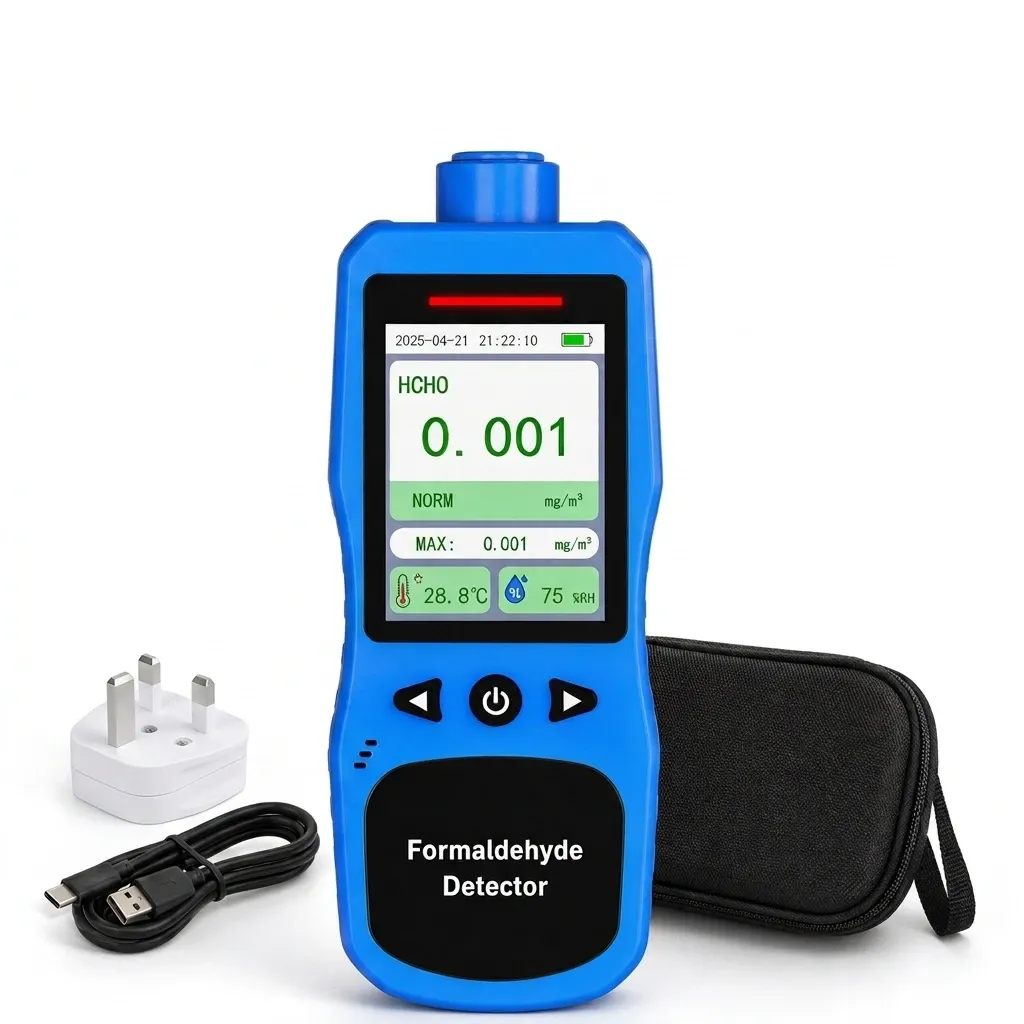
A formaldehyde meter samples the surrounding air and estimates the concentration of HCHO using an internal sensor. The result is usually shown on a digital display, often alongside other environmental information such as temperature or humidity.
For most buyers, the key benefit is not the chemistry inside the device but the speed of decision-making it enables. Instead of guessing whether a room smells “new” or “stuffy”, you can work from a visible reading.
What the Display Usually Shows
- HCHO concentration
- Air quality status or warning level
- Visual colour indicators
- Battery status
- Sometimes temperature and humidity
Why Alerts Matter
For home users and busy workplaces, alerts are more useful than many people expect. A device with vibration, sound and visual alerts makes it easier to notice when readings rise, even if you are not staring at the screen. That is especially helpful for landlords during inspections, maintenance teams, childcare settings, and homeowners checking several rooms in one go.
Rechargeable vs Disposable Power
A rechargeable formaldehyde meter is often the better option for regular use. It reduces the hassle of replacing batteries and makes the device easier to keep ready for spot checks after decorating, cleaning or introducing new furnishings.
Who Should Buy a Formaldehyde Meter?
The strongest reason to buy a formaldehyde meter is not technical curiosity. It is the need to make a property healthier, safer or easier to manage. In the UK market, the most common buyers fall into a few clear groups.
Homeowners
If you have recently bought furniture, renovated a room or moved into a newer property, a meter helps you identify whether off-gassing may be affecting indoor air quality. It is particularly useful in bedrooms, nurseries and home offices where people spend long periods.
Landlords and Letting Managers
Landlords need practical tools to assess the condition of a property between tenancies. A formaldehyde meter can help flag indoor air concerns in recently refurbished flats or houses furnished with composite wood products.
Small Businesses
Childcare providers, salons, clinics, offices and hospitality venues all benefit from a clearer view of indoor air conditions. Air quality affects comfort, confidence and, in some settings, professional duty of care.
Environmental and Safety Professionals
Consultants and inspectors may use portable meters as part of an initial assessment before deciding whether more detailed investigation is required.
What to Look for When Buying a Formaldehyde Meter in the UK
Not every device is suited to every buyer. A homeowner checking one or two rooms does not always need the same specification as a professional carrying out repeated site visits. The best choice depends on how often you will use it, how quickly you need readings, and how much confidence you need in trend monitoring.
1. Clear HCHO Readings
The device should display formaldehyde readings in a clear, readable format. Complicated menus and tiny displays slow people down and increase the risk of missed warnings.
2. Fast Response Time
A useful meter should react quickly enough for practical room checks. If you are comparing a newly decorated bedroom with a well-ventilated lounge, a sluggish reading makes the process frustrating and less informative.
3. Reliable Alert System
Look for a model with visual, sound and vibration alerts. This is one of the simplest ways to make a monitor more usable in real life. If air quality worsens while you are walking through a property, the device should tell you immediately.
4. Rechargeable Battery
Rechargeable units are convenient for repeat checks and reduce running costs over time. For many UK buyers, that is more practical than keeping spare disposable batteries on hand.
5. Portable Design
A compact meter is easier to carry from room to room, store in a drawer, or take to a rental property, office or job site.
6. Build Quality and Seller Trust
Buying from a UK specialist matters. You want a seller that understands local usage, can explain the product properly and offers straightforward support. That is especially important with indoor air quality devices, where buyers often need guidance on interpreting readings rather than simply switching the unit on.
If you are comparing related product types, Formaldehyde Air Quality Tester Explained: A UK Buyer's Guide and HCHO Detector Explained: A UK Buyer's Guide can help clarify naming differences and buying priorities.
Formaldehyde Meter vs HCHO Detector vs Air Quality Tester
UK shoppers often see several names used for very similar products. That can be confusing at first, but the distinction is usually straightforward.
Formaldehyde Meter
This term usually refers to a device focused on measuring formaldehyde concentration directly. It is the most precise term for buyers specifically worried about HCHO.
HCHO Detector
This means largely the same thing, using the chemical shorthand. Some product listings prefer “HCHO detector” because it is the label shown on the screen or packaging.
Formaldehyde Air Quality Tester
This term often suggests a broader consumer device that measures formaldehyde while also presenting general air quality information. For many home users, this is the most accessible style of product.
If you want a fuller overview of terminology and device types, return to The Ultimate Guide to HCHO Monitor in the UK, which sets out the wider picture in more detail.
How to Use a Formaldehyde Meter Properly
A good reading depends on sensible use. Even a quality device can give misleading results if it is used too quickly or in the wrong conditions.
Before Testing
- Charge the device fully.
- Read the instructions from the manufacturer or seller.
- Allow the meter to acclimatise to the room if it has just been moved from outdoors or from a very different temperature.
- Avoid taking an immediate reading next to a window, vent, cleaning spray or strong scent.
During Testing
- Place or hold the meter at breathing height where possible.
- Check several parts of the room rather than relying on one spot.
- Pay special attention to areas with new furniture, flooring or paint.
- Watch for patterns over time, not just a single number.
After Testing
- Ventilate the room if readings are elevated.
- Reduce or remove likely sources where practical.
- Retest later the same day and again over the following days.
- Keep a note of readings if you are monitoring a property over time.
For a more complete framework on using HCHO monitoring devices in British homes, see The Ultimate Guide to HCHO Monitor in the UK.
When a Formaldehyde Meter Is Most Useful
Many buyers only think about formaldehyde after there is a smell, irritation or concern raised by a family member, tenant or colleague. In reality, the best time to use a formaldehyde meter is often before a problem becomes harder to trace.
After Decorating or Renovation
Fresh paint, adhesives, sealants and new fitted materials can all affect indoor air. A meter helps you decide whether a room needs more airing before normal use.
After Buying Furniture
Flat-pack wardrobes, desks, drawers and shelving made from engineered wood products are a common trigger for concern. Testing gives you a more objective basis for action than smell alone.
In New Builds or Recently Refurbished Rentals
Modern materials can improve efficiency and appearance, but indoor emissions may be higher in the short term. A portable meter can help track how conditions settle.
In Sensitive Spaces
Bedrooms, nurseries, care environments and workspaces deserve extra attention because people spend long periods there. Monitoring can support better ventilation habits and purchasing decisions.
Understanding Readings Without Overcomplicating Them
Most buyers do not need a chemistry lesson. What they need is a sensible way to respond to readings. A formaldehyde meter is best used as a decision-making tool rather than a one-off verdict on a room.
If readings are low and remain stable, that suggests the space is less likely to have a significant HCHO issue at the time of testing. If they rise around new furniture, after decorating, or when windows stay shut, that points to a likely source-and-ventilation problem that can be managed.
If readings stay persistently high despite ventilation and source reduction, that is a sign to investigate further and consider professional advice, particularly in commercial settings or where vulnerable occupants are affected.
UK Buying Advice: Why Seller Expertise Matters
Indoor air quality products are not the same as buying a generic household gadget. Buyers often need help choosing the right level of monitoring, understanding what alerts mean and using the device properly in British homes and workplaces.
That is where a specialist retailer adds value. VibTest positions its products around a practical UK use case: instantly detecting harmful HCHO levels with a rechargeable formaldehyde air quality tester that includes vibration, sound and visual alerts. Those benefits are not marketing extras; they address the exact problems real users face when checking a home, rental or workspace quickly.
For trust, buyers should look for clear product information, UK-based support, transparent specifications and content that explains where the device fits into real-world monitoring rather than making exaggerated promises.
Common Mistakes Buyers Make
- Choosing on price alone: A very cheap device may be harder to trust, harder to read or less useful in repeat testing.
- Taking one reading as final: Formaldehyde levels can vary with temperature, ventilation and source proximity.
- Ignoring alerts: A warning only helps if you respond by ventilating, checking sources and retesting.
- Testing too close to a strong source: This can skew interpretation if you assume the whole room matches that exact spot.
- Expecting a home meter to replace full professional assessment: A formaldehyde meter is an excellent screening and monitoring tool, but persistent concerns may justify deeper investigation.
Call to Action: Choose a Formaldehyde Meter Built for Everyday UK Use
If you want a practical way to check indoor air and spot harmful HCHO levels quickly, a rechargeable formaldehyde meter with sound, vibration and visual alerts is a strong place to start. It gives you immediate feedback in the rooms that matter most, whether you are checking a family home, a rental property or a small business setting.
Browse VibTest formaldehyde monitoring products to find a device designed for straightforward UK use and faster indoor air quality checks.
If you are still comparing options, start with The Ultimate Guide to HCHO Monitor in the UK, then explore Formaldehyde Air Quality Tester Explained: A UK Buyer's Guide for a closer look at related devices.
Frequently Asked Questions
What does a formaldehyde meter measure?
A formaldehyde meter measures the concentration of formaldehyde gas in the air, usually shown as HCHO on the display. It helps you identify whether indoor materials or poor ventilation may be contributing to unhealthy air conditions.
Do I need a formaldehyde meter at home in the UK?
You may not need one in every household, but it is particularly useful after decorating, buying new furniture, moving into a new build, or if anyone in the property is sensitive to indoor air issues. It gives you a practical way to check rooms rather than relying on smell or guesswork.
Is a formaldehyde meter the same as an HCHO detector?
In most product listings, yes. “HCHO” is simply the label often used for formaldehyde in air quality devices. The two terms are usually describing the same type of monitor.
What should I do if my formaldehyde meter shows a high reading?
Start by improving ventilation, reducing likely sources such as new furnishings or strong chemical products, and retesting after some time has passed. If readings remain elevated, especially in a workplace or occupied rental property, consider further investigation and professional advice.
Ready to test your air with VibTest?
Secure Your Air Now — £73.16