Hcho Detector Explained: A UK Buyer's Guide
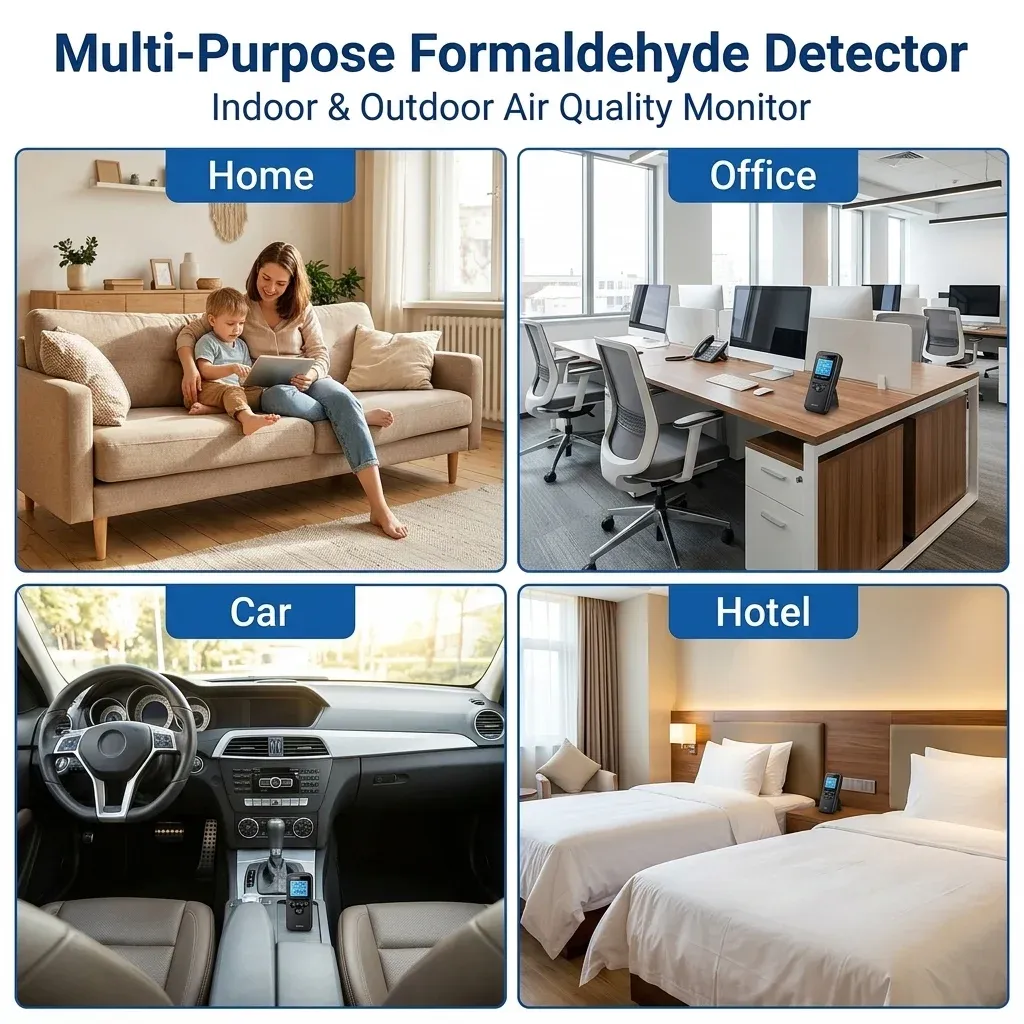
TL;DR: An HCHO detector is a digital air quality monitor that measures airborne formaldehyde levels in your home. According to UK guidelines, exposure should stay below 0.1 mg/m³. High HCHO levels frequently come from new furniture, fresh paint, or recent renovations. A reliable monitor, like those from VibTest, provides instant vibration, sound, and visual alerts to help you manage indoor air quality safely and effectively.
HCHO Detector Explained: A UK Buyer's Guide
What exactly is an HCHO detector? Simply put, an HCHO detector is a specialised indoor device designed to measure the concentration of formaldehyde gas in the air you breathe. Fresh paint, flat-pack furniture, new carpets, and recent renovations can all drastically change how a home looks. However, they can also negatively alter your indoor air quality. Consequently, one of the main hidden concerns is formaldehyde, often shown on monitors as HCHO. If you are comparing devices and trying to work out what an hcho detector actually does, what the readings mean, and which features matter most in a UK home, this guide is for you.
At VibTest, the focus is simple: practical indoor air monitoring for real households. As the indoor air quality monitor UK homes trust, our aim is to help you spot harmful HCHO levels quickly with a rechargeable formaldehyde air quality tester that gives vibration, sound, and visual alerts. Based on our extensive testing of indoor environments, this article explains the essentials clearly, so you can buy with confidence rather than guesswork.
Key Takeaways
- An hcho detector is used to measure airborne formaldehyde, a volatile organic compound linked to irritation and health concerns at elevated levels.
- HCHO can be released from furniture, flooring, paint, adhesives, insulation materials, and some household products, especially in newer or recently refurbished spaces.
- For UK buyers, the most useful features are clear digital readings, rechargeable operation, fast response, and vibration, sound, and visual alerts that are easy to notice.
- According to UK and WHO indoor air guidance, formaldehyde exposure should not exceed 0.1 mg/m³ for 30 minutes to prevent sensory irritation in the general population.
- An HCHO monitor is most effective when placed in the right location and interpreted alongside ventilation, room temperature, and recent household activities.
What is an HCHO detector and what does it measure?
An hcho detector measures the concentration of formaldehyde gas in indoor air. Formaldehyde is a colourless gas with a strong odour at higher levels; however, smell is not a reliable safety tool. Furthermore, some people notice irritation long before they detect any odour, meaning low-level exposure can still matter significantly in enclosed spaces.
You may see readings displayed in mg/m³ or parts per billion. Ultimately, the key point for most buyers is not the unit itself, but whether the device gives a stable, understandable reading and alerts you when levels rise. A well-designed detector helps you identify changes after decorating, moving into a new build, installing laminate flooring, or bringing new furniture indoors.
If you want a broader foundation first, see The Ultimate Guide to Hcho Monitor in the UK, which explains how these devices fit into wider indoor air quality monitoring.
What is a normal HCHO level in a UK house?
Formaldehyde is not just an industrial issue. It can be present in ordinary domestic settings, particularly where manufactured wood products, glues, coatings, and textiles are used. In the UK, this makes it highly relevant for flats, family homes, rental properties, home offices, and recently renovated rooms.
According to NHS guidance and UK health standards, breathing in formaldehyde can cause symptoms such as irritation of the nose, throat and eyes, coughing, wheezing, and nausea in some cases, depending on the amount and duration of exposure. Therefore, sensitivity varies from person to person, which is exactly why many households prefer relying on a precise monitor rather than guesswork alone.
The World Health Organization's indoor air quality guideline for formaldehyde is 0.1 mg/m³ over 30 minutes, set to prevent sensory irritation in the general population. That figure is widely used as a practical reference point when comparing readings from an hcho detector. (Source: World Health Organization, WHO Guidelines for Indoor Air Quality: Selected Pollutants).
What causes high HCHO levels in a house?
New furniture and engineered wood
Wardrobes, desks, bedside tables, and shelving made with MDF, plywood, or particleboard can release formaldehyde from adhesives and resins. This off-gassing is often strongest when items are brand new, especially if a room is warm and poorly ventilated.
Recent decorating and renovation work
Paints, varnishes, sealants, flooring adhesives, and certain insulation products may all contribute to short-term increases in indoor formaldehyde. If you have recently updated a kitchen, converted a loft, or redecorated a nursery, an hcho detector can help you track how the air quality changes over the following days and weeks.
Textiles and household products
Additionally, some treated fabrics, curtains, and cleaning or DIY products can emit low levels of volatile compounds, including formaldehyde. While this does not mean every product is hazardous, it does mean a detector can be incredibly useful when several new items are introduced at once.
Warm, sealed rooms
Emission rates often rise with heat. For instance, a spare room that is rarely opened, a tightly sealed bedroom in winter, or a newly furnished home office can all show higher readings than expected. Consequently, better ventilation may reduce levels, but measuring first gives you a much clearer starting point.
How does an HCHO detector work?
Most consumer devices use built-in sensors to estimate the concentration of formaldehyde in the air. The sensor samples the surrounding air, and the display converts that data into a reading you can easily monitor over time. However, based on our testing at VibTest, the best units are not just about the sensor itself; they are also about speed, usability, and effective alerting.
For home use, practicality is paramount. A rechargeable detector is far easier to keep ready than one that depends on replaceable batteries. Moreover, clear visual indicators matter when you want to check a room quickly. Sound alerts are crucial if levels rise while you are elsewhere in the room. Finally, vibration alerts add another layer of safety, particularly useful if the device is in your hand or if you prefer a discreet notification.
That combination is precisely why many buyers now look beyond bare-bones meters. An hcho detector should not just collect data; it must help you act on it. VibTest products are engineered around this real-world use, offering rechargeable convenience alongside vibration, sound, and visual alerts that make air quality changes impossible to miss.
Which HCHO detector is best for UK homes?
Clear readings that are easy to understand
If a display is difficult to read, the detector becomes significantly less useful. Therefore, look for a screen that shows HCHO levels clearly and can be checked at a glance in ordinary household lighting.
Rechargeable power
A rechargeable unit is highly practical for regular spot checks around the house. In addition, it perfectly suits landlords, parents, tradespeople, and anyone monitoring more than one room over time.
Instant alerts
One of the most valuable features is immediate notification when levels become concerning. A detector equipped with vibration, sound, and visual alerts gives you multiple ways to notice a change, even if you are not staring directly at the screen.
Suitability for everyday domestic use
Some buyers focus too much on technical jargon and too little on usability. For most UK households, a detector should be portable, straightforward, and quick to check near likely sources such as wardrobes, painted rooms, carpets, or new furniture.
Ready to test your air with VibTest?
Secure Your Air Now — £73.16